Ant Control
Stop Ants in Liverpool
Targeted treatments for trails, nests and entry points around kitchens, patios and utility areas.
What we do
Ant control that targets the nest
Abbotsbury Pest Control inspects trails, nesting sites and entry points around kitchens, patios and utility areas. We use residual baiting and targeted treatments to stop colony activity and reduce repeat foraging. Pricing follows inspection.
Ants often return because the nest is missed. We locate trails and nesting sites, then apply treatments that stop the colony and discourage new foragers.
Keep children and pets away from treated areas until surfaces are dry. Avoid cleaning treated surfaces for 24 hours to let the bait work.
Why choose this
Fewer ants sooner
Targeting the nest reduces the colony faster than surface sprays alone. This approach lowers the chance of ants returning in the same season.
Nest location
We find trails and nesting sites instead of guessing where ants are coming from.
Residual baiting
Bait stations are placed where ants are active, so the colony carries the treatment back to the nest.
Targeted treatments
Direct treatments are applied to entry points and nesting areas to stop activity quickly.
Follow-up included
A follow-up visit is included to check if the colony is under control and to treat any new activity.
How it works
From inspection to follow-up
The process starts with locating trails and nesting sites, then applying treatments that stop the colony. A follow-up visit confirms the nest is under control.
STEP 01
Inspection
We walk the property to find trails, nesting sites and entry points around kitchens, patios and utility areas.
Look for these
Signs you have an ant problem
Visible trails
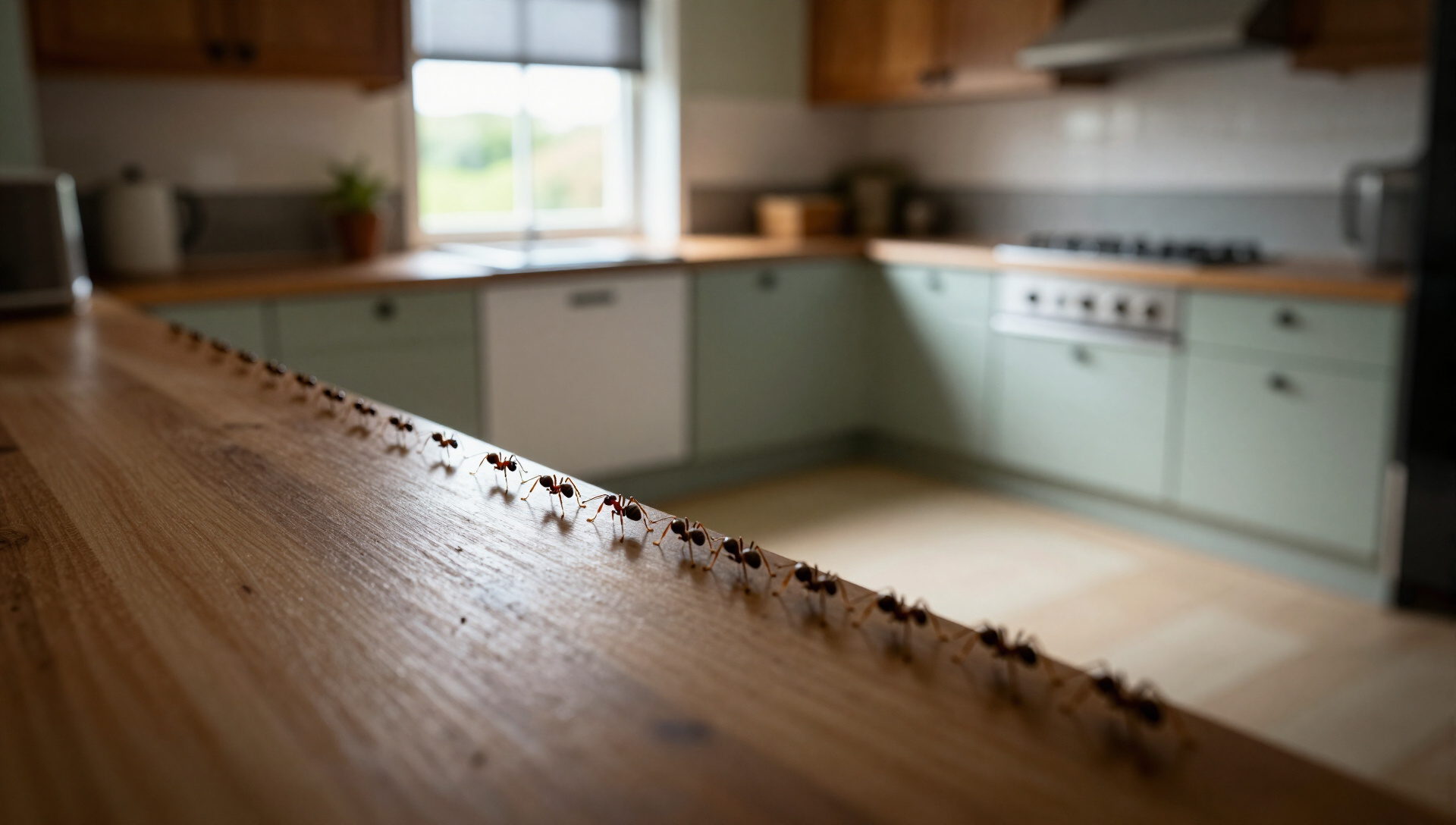
Thin lines of ants moving between food sources and nesting sites, often along skirting boards or edges of paving.
Nesting sites
Small piles of soil or debris near paths, under pot plants, or in wall cavities where ants are tunnelling.
Entry points
Ants squeezing through gaps around windows, doors, pipes or under eaves where they enter the building.
Food trails
Ants appearing on benches, inside cupboards or around rubbish bins where they are foraging for food.
Swarming
Winged ants emerging indoors or outdoors when a nest is mature and preparing to reproduce.
Frass
Tiny soil-like particles or wood shavings near nesting sites, especially in wall voids or under floors.
Common issues
Why surface sprays alone don’t work
Surface sprays can kill foraging ants but often miss the nest. The colony survives and sends out new foragers, so the problem returns quickly.
Missed nests
Surface sprays don’t locate or treat the nest, so the colony keeps sending out foragers. This leads to repeated sightings within days.
Bait avoidance
Some ants avoid surface sprays but still forage. Without baiting, the colony isn’t exposed to the treatment and keeps growing.
New foragers
Even if surface sprays kill some ants, the colony can quickly replace lost foragers. This keeps the trail active and the problem ongoing.
Questions
Common questions about ant control
Ant activity usually drops within hours of treatment as the colony carries bait back to the nest. Foragers may still be visible for a day or two as the bait takes effect. If activity continues beyond 48 hours, a follow-up visit can be arranged.
Clear kitchen benches and remove food from floors and tables. Keep pets and children away from areas where ants are active until the inspection is complete. Do not clean treated surfaces for 24 hours after treatment.
Surface sprays kill foraging ants but often miss the nest. The colony survives and sends out new foragers, so the problem returns within days. Targeting the nest with baiting and direct treatments stops the colony and reduces repeat foraging.
Treatments are placed where ants are active and away from edible plants. Keep pets and children away from treated areas until surfaces are dry. If you have sensitive plants, let the technician know during the inspection.
Ready to stop ants returning
Get ant control in Liverpool today
Tell us where you see ants, trails or nests and we’ll arrange an inspection. Treatments target the nest to stop the colony and reduce repeat foraging.
Get in touch
Call Abbotsbury Pest Control
For ant control in Liverpool and nearby areas, call (02) 5550 0123 or send a message below.